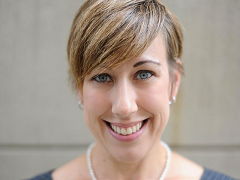
Samantha Harkins is CEO of Lansing 5:01, our region’s talent attraction organization, and Founder/CEO of Hundred Place Consulting. Her work centers on building strong communities and supporting the organizations that serve them.
With more than 20 years of experience in public policy, advocacy, and local government, Samantha has held leadership roles across the public and private sectors. Her career includes positions with the Michigan House of Representatives, Detroit Regional Chamber, and the Michigan Municipal League, where she led statewide lobbying efforts and later served as President of the MML Foundation. She also served as Vice President of Government Relations at Munetrix and as Deputy Mayor for the City of Lansing.
Samantha has been recognized as one of Michigan’s top lobbyists and a “person to watch” in politics by Crain’s Detroit Business. She is a graduate of West Virginia University, holding both a J.D. and a B.A. in Political Science, and has completed executive education through the Harvard Kennedy School.
She launched Hundred Place Consulting in 2020, working with clients such as the Lincoln Institute for Land Policy, the City of Flint, and the Community Economic Development Association of Michigan.
Originally from Hundred, West Virginia, Samantha now lives in downtown Lansing with her family, where she enjoys reading and running.
Max Hondorp, a junior at Lansing Catholic High School, is helping the community honor the U.S. flag through part of his Eagle Scout Project. Max built two flag collection boxes that will be placed at two locations in East Lansing from March 23-June 10, 2026:
East Lansing Fire Department (1700 Abbot Road)
St. Thomas Aquinas Church (955 Alton Road)
The collected flags will be respectfully retired during a flag burning ceremony on Flag Day, June 14, ensuring they receive the honor they deserve.
The following proposed corporate members have emailed their application to the office. If anyone has a comment on these proposed members please forward it in writing within ten days to the Rotary office. Thank you,
Dick Peffley, General Manager of Lansing Board of Water & Light - Primary
Smiljana Williams, Chief of Staff - Associate Member
Heather Shawa, Assistant General Manager - Associate Member
We have a service opportunity at the Greater Lansing Food Bank on Wednesday, May 27th from 9:00 a.m. to 11:00 a.m. and Tuesday, September 22nd from 9:00 a.m. to 11:00 a.m. located at 5600 Food Ct., Bath Township. Please let Jason Brunette know if you can help: Jason.Brunette@martincommercial.com
A total of $40,000.00 was approved by the Rotary Club of Lansing Foundation Board for International Grants from the committee. Each week we will highlight one of the non-profits receiving our checks.
Samuel Omogo Foundation
This project addresses the need for clean water for schools, churches, and villages in Ebonyi State, Nigeria. Since 2012, this has been accomplished wholly by donations and the subsequent installation of water-wells that serve an entire village, school, church, or hospital. The commuinities served all suffer from extreme poverty and lack for basic human needs.
Women and children are typically responsible for the provision of household water (for cleaning, cooking, drinking, and hygiene). Those responsisble for fetching water spend between 1 to 3 hours walking, each way, to obtain water. They may then wait between 15 minutes to 5 hours for their turn at the water source. Most water sources are contaminated with sewage, animal dung, and plant debris. Water-borne illnesses from contaminated water cause approximately 407 deaths in children under age 5, per day (according to 2017 data), in Nigeria. Consequently, many women are unable to seek employment and children are unable to attend school. Without access to this basic need, the population remains in extreme poverty. Access to clean water results in substantially reduced cases of water-borne illnesses, children are free to attend school, and women can seek employment.
All of these are needed to support a population seeking a path out of poverty. SOF will use the grant money for additional wells. To date, all wells provided (504 since 2012) have been funded by donations. The villages, schools, and hospitals applying for wells each year far exceed the funding capabilities of SOF.
Samuel Omogo Foundation was awarded a grant of $5,000.00 and Heidi McNaughton was the sponsor.
This year the Rotary Club of Lansing Foundation has allocated $82,567.00 for its Local Grants program. Grants up to $10,000 for local nonprofits that serve residents of Ingham, Eaton, and/or Clinton Counties. Funds may be requested to be used toward capital campaigns, general operating expenses, special projects/events, and ongoing program support.
Grants will be evaluated based on the impact the project will have on the Lansing area and must address one or more of the following:
serve residents of Ingham, Eaton and/or Clinton counties; impact underserved or disadvantaged populations, enhance cultural, recreational, or economic elements of the community; demonstrate a unique or emerging need that is unmet by another organization; and grants will be awarded for existing programs, new initiatives, or special projects.
At precisely 12:30:25, President Chris brought the meeting to order with the chiming of the bell. He extended a warm welcome to John Dale Smith, who was back at the piano. This gave Hari Kern the perfect break to give today’s Reflection.
But first, Rotarians recited the four-way test.
Hari then took to the lectern and professed that, eight years prior when she became a member of our club, she believed that the tradition of reciting the four-way test and having a Rotarian deliver the invocation or reflection was an important and meaningful touchtone with which to begin meetings. For Hari, the significance of these practices hasn’t waned. She continues to believe that we should underscore why we gather and give voice to our common values. Given that today’s speaker will focus on art and community, Hari thought it appropriate to reflect on what the arts bring to us, individually and communally. She and Ben Rathbun (today’s Chair of the Day) are members of the Broad’s advisory board. They are both grateful that “such a superb museum exists in our community, and we feel honored to support it in various ways.” She added, “All of us here couldn’t imagine a world without the arts in general, so let us all affirm our gratitude for human creativity.” Then Hari asked, “How do the arts make the world a better place?” She referred to the arts through the diverse range of human practices, skills and imaginative activities, including painting, music, literature, dance and theater that express experiences, emotions and ideas. In 2016 World Economic Forum, Crystal Award winner Olafur Eliasson declared, “Art has the power to change the world.” Renown photographer, conservationist and writer, Christina Mittermeier, reminded us that, “The transformative power of art can inspire action and foster empathy, hope and a deeper connection to nature.” Hari invited us to be open to the power of art and the wellspring of our own creative abilities. “Let us give thanks for how the arts inspire us, help us to better understand each other and motivate us for good.” Thanks for a beautiful reflection, Hari.
We raised our voices and sang our Patriotic Song song, “America the Beautiful.” Alex Hernandez then tossed around the padded blue mic cube for the Introduction of Guests and Visiting Rotarians. Chris Holman introduced Jessica Benavides, Lansing School District’s interim superintendent. He credited her for significantly increasing student graduation percentages. Chris warned Rotarians that Jessica had the jurisdiction and ability to send any one of us out into the hall. Sue Hansen quipped, “Including you, Chris!”
Barb Whitney introduced Melissa Kaplan, a dear friend who works at the intersection of the arts in an interdisciplinary way. Melissa is a trusted colleague, Barb said; a sounding board and a champion for the arts. “She is one of those people who uplifts you when you’re not in the room.”
Diane Sanborn met Trisha Washburn at our club’s Feb. 26 Social Gathering. Trisha is interested in applying for grants for her nonprofit, A Place For Us, which is a 24-hour, full-service homeless shelter with professional case management and wraparound services. It was started in the fall of 2023 in response to the housing crisis.
For the Health of the Club, President Chris announced that Margaret Bates, wife of long-time Rotarian Jack Bates, passed away Feb. 24. She was 97 years old. In lieu of flowers, please donate to the Rotary Club of Lansing Foundation Endowment Fund in memory of Jack Bates.
The DeWitt High School Choir performed for Special Music, thanks to John Dale Smith. They’re putting on a concert version of “Guys and Dolls,” replete with costumes, a 10-piece orchestra, dancing and a narrator who’ll help tell the story. John invited the students to introduce themselves: Liv Mollitor (Miss Adelaide), Leah Gates (Sarah Brown), Rowan Paige (Benny Southstreet) and Jacob Schorfhaar (Nicely-Nicely Johnson). They sang “Marry the Man Today” and “Guys and Dolls,” affirming that this is a must-see performance.
President Chris reminded all that the DEI committee will convene after today’s meeting. Additionally, the Local Grants Applications process opened today. We should have received an email with a link to SlideRoom. The deadline is April 20, no exceptions. Please let nonprofits in your network know about this opportunity.
Chair of the Day Ben Rathbun introduced today’s speaker, Phillip Bahar, executive director of MSU Broad Museum. Mr. Bahar’s presentation was entitled “Art is Community: Reflections from the MSU Broad Art Museum.” Highlights are noted below.
Phillip onboarded as museum executive director this past November. Ever since the museum was first built by architect Zaha Hadid, Phillip has admired it. “It is a statement of MSU’s commitment to the arts,” he said.
“It’s in communion with individuals and communities that art truly flourishes. I believe art is essential to every thriving community, regardless of location, demographics or economics, and if you think about places where art touches people every day in different moments in their life when they’re not even thinking about art — when you’re driving and you’re listening to music, if you’re at church and you’re in a choir, if you’re in a school group and you’re starting to do some kind of arts activity just for fun — arts really are the foundation of what I think human society is and certainly the residue that we leave behind, hundreds of thousands of minutes later.”
“Artists think outside of the box to try to tell their stories. Art opens our eyes, helping us see the world differently, and sometimes, we never see the world again in the same way.”
“Art creates community. For me, art is community. I’m sure some of you are asking yourselves, ‘Which communities are you talking about?’ And there’s maybe even an undercurrent of ‘What more could the Broad be doing to be creating this arts infrastructure; this art community?’ I certainly have my ideas, and I’ve heard it from a number of voices already in this room that I’ve met over the past four months.”
“I’m hearing the hopes, the dreams, the expectations, and I’m really learning every day what the strengths of the arts community is, where there might be gaps and how the Broad can help support ongoing evolution and development to create the community that we collectively want here in Lansing.”
Phillip asked how many of us have regularly visited museums and whether we did so while traveling or on business. He asked if we’ve visited museums in Detroit, Grand Rapids, Ann Arbor, Midland and Kalamazoo.
“Only about 18% of Americans go to an art museum each year. Many more go to a broader range of science, natural history and children’s museums.” Overall, participation in art museums is down since COVID from 24%.
“How many of you have visited the MSU art museum … in the last year? We clearly have some work to do to build that community. I’ll have to talk to Laurie [Baumer] about scheduling a Rotary outing to the Broad sometime soon.”
“Salvador Dali was the most celebrated surrealist artist of our time. He was probably the first artist that impacted me at the age of 9 or 10. I bumped into his work at the Joslyn Art Museum in Omaha, Neb., where I was raised, and that same museum had a program called Bagels and Bach every month, where they had small quartets, trios playing Bach music. You’d eat bagels, you’d hang out. And I remember, this was the first time … feeling the energy and sense of community that a museum could create, simply by existing but also by filling it with programs and people with inquisitive minds and an interest in learning something new. Here was a group of people connected through sight and sound. The museum was filled with a multigenerational crowd, made up of families and friend groups. It was really a snapshot of the broader community. It was the moment I realized that museums could be welcoming, comforting, visually stimulating. It helped me envision how I could maybe play a role in that element of our society. These formative experiences revealed that art can be transformative to individuals and communities in truly powerful ways.”
Children light up when they’re engaged in art. Art helps them grow cognitively, connect with others, develop empathy, envision what might be possible that isn’t possible today.

 Project. Max built two flag collection boxes that will be placed at two locations in East Lansing from March 23-June 10, 2026:
 We have a service opportunity at the Greater Lansing Food Bank on Wednesday, May 27th from 9:00 a.m. to 11:00 a.m. and Tuesday, September 22nd from 9:00 a.m. to 11:00 a.m. located at 5600 Food Ct., Bath Township. Please let Jason Brunette know if you can help:
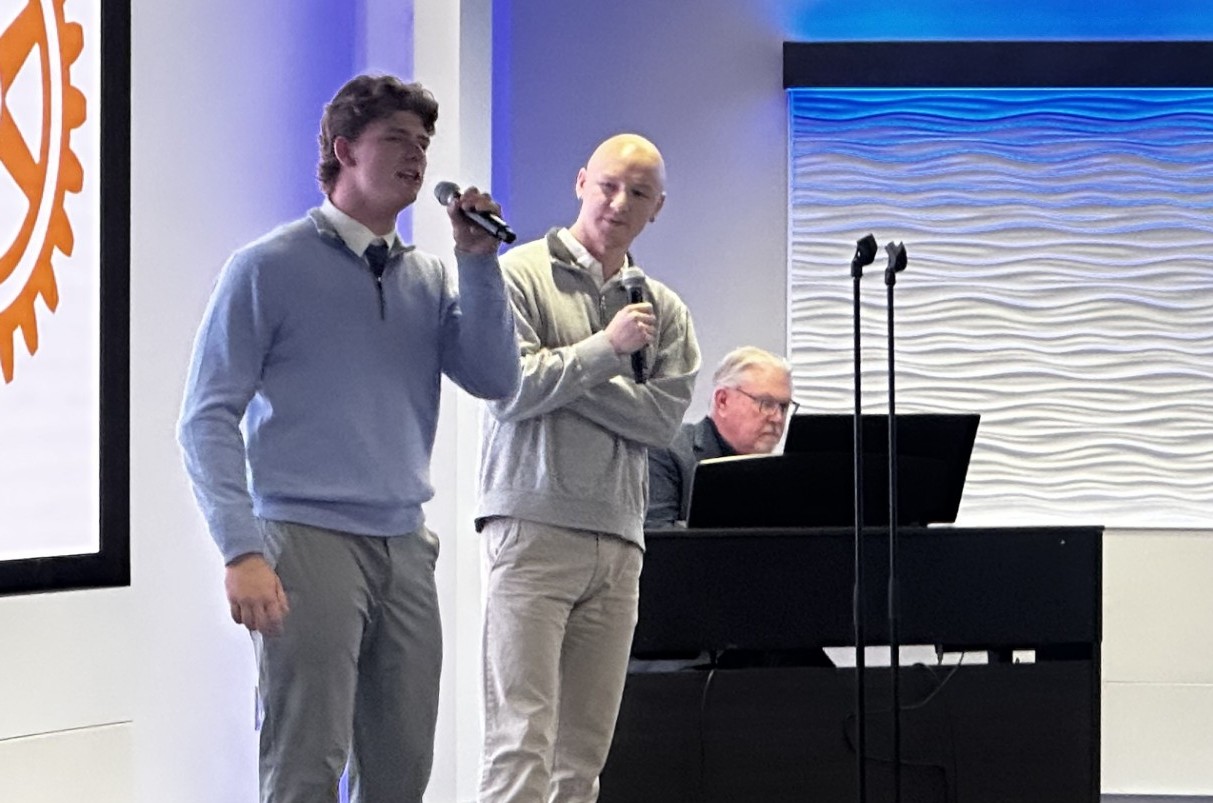 “Guys and Dolls,” replete with costumes, a 10-piece orchestra, dancing and a narrator who’ll help tell the story. John invited the students to introduce themselves: Liv Mollitor (Miss Adelaide), Leah Gates (Sarah Brown), Rowan Paige (Benny Southstreet) and Jacob Schorfhaar (Nicely-Nicely Johnson). They sang “Marry the Man Today” and “Guys and Dolls,” affirming that this is a must-see performance.
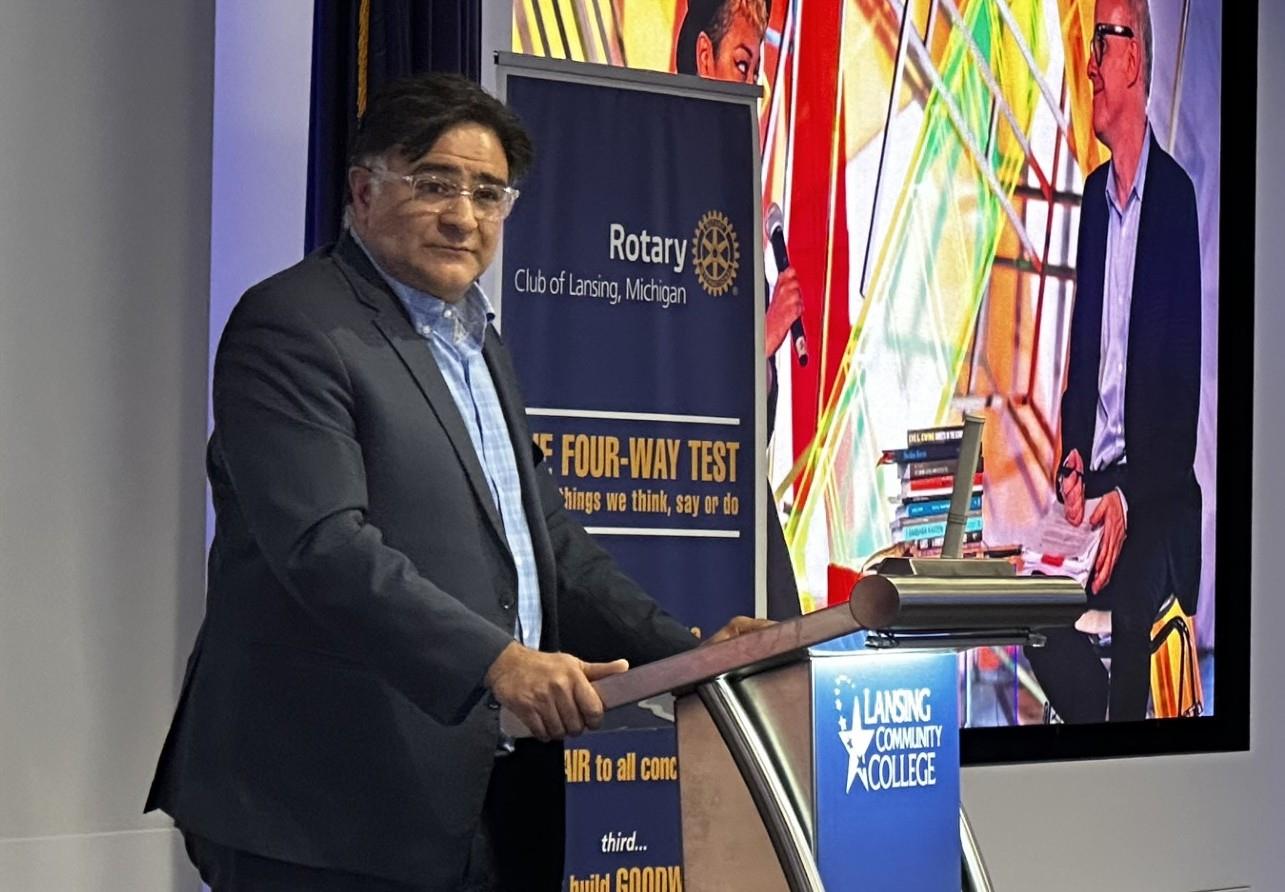 Zaha Hadid, Phillip has admired it. “It is a statement of MSU’s commitment to the arts,” he said.