Please note for our meeting Friday, July 17th we will not be able to use the Grand Avenue entrance to the Gannon Ramp. There is an event that will be taking place across the street at the park. The entry ramp off of Saginaw will take you to the second floor, you can then drive down to the first level or just use the stairs/elevators to get to the first level. Thank you!
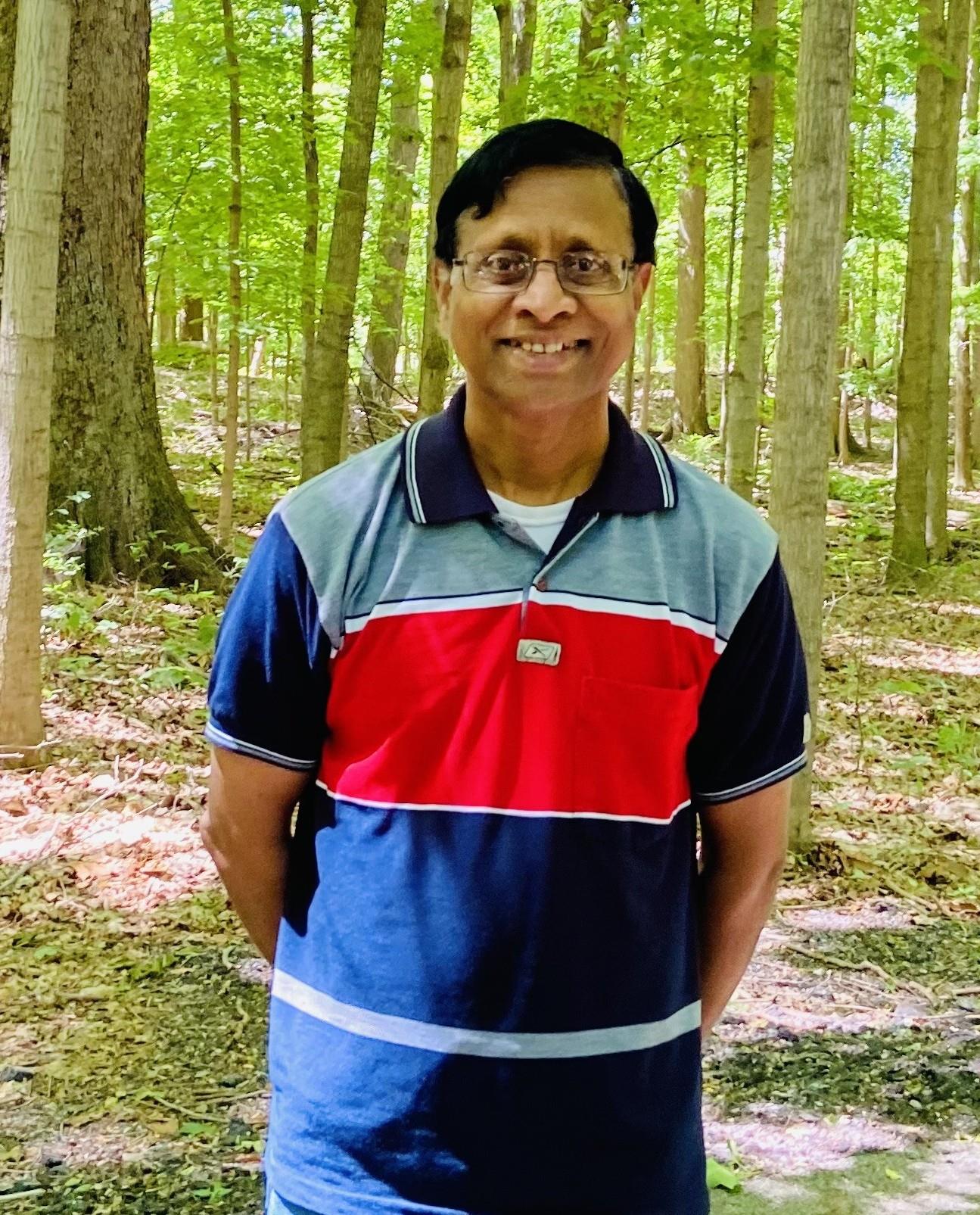
Govindarajan Murali — who goes by Murali — is the founder of Voices of Ingham Human Library, a community-building initiative right here in the mid-Michigan area. The concept is simple and profound: real people volunteer as “Live Books,” sharing their personal stories in small group conversations — stories that cross lines of background, experience, and perspective.
Since launching in July 2025, Voices of Ingham has brought together community members, seniors, students, and neighbors who might never otherwise sit across from one another. The initiative’s tagline says it best: Real People. Real Stories. Real Connection.
Murali is a Distinguished Toastmaster, a Walmart associate, and — most importantly — a committed community builder who saw a need for deeper human connection in Ingham County and decided to do something about it.
We have a service opportunity at the Greater Lansing Food Bank on Tuesday, September 22nd from 9:00 a.m. to 11:00 a.m. located at 5600 Food Ct., Bath Township. Please let Jason Brunette know if you can help: Jason.Brunette@martincommercial.com
The MSU Broad Art Museum has invited us to an evening of art, networking, and civic conversation. This will be our "Social Gathering" for September, inviting other Rotary Clubs to join us as well.
Thursday, September 24, 4:30 - 7:00 pm
Broad Art Museum @ Michigan State University
547 E. Circle Drive, East Lansing, MI (Paid parking available in MSU Ramp 6 or street/ramp parking in downtown East Lansing)
The evening includes a reception, networking, and an opportunity to explore the MSU Broad Art Museum, including the exhibit:
President Susan Angel called Rotarians to order at 12:30 p.m., leading attendees in the recitation of the Four-Way Test.
Katie Krick delivered the Reflection. She opened with “Rotary is a wildly effective, impactful organization” that does world-changing, life-saving work in the form of fruits that grow from very diverse soils. Rotary doesn’t focus on or help one particular ethnic group, country, religion, or culture. Rather, it brings together people from every culture, religion, and tradition, and puts us in a humanitarian Venn diagram. In the center is our starting point for change, like clean water, education, medicine, and equality, where we can find unity. “The truth is,” Katie said, “Most people don’t want to hear about women and girls and their bleeding.” Through her ministry in this area, however, Katie learned that the majority of religious texts talk about bleeding women — orderly and disorderly; healthy and unhealthy bleeding. Katie shared a story from the Bible about a bleeding woman, accounted for in the Books of Matthew, Mark, and Luke. Jesus is on his way to save the life of a 12-year-old girl. A woman who had been subjected to bleeding for 12 years touched his cloak, thinking it would heal her. Jesus saw her and said, “Go in peace, your faith has made you well.” Her bleeding stopped and she was freed from her suffering. Katie commended Rotarians for coming to attending today’s meeting.
Today’s Patriotic Song was “God Bless America.”
Amy Partin admirably handled mic duty for the Introduction of Guests and Visiting Rotarians, beginning with Ben Rathbun, who has a corporate membership. He introduced his new employee, Rofol.
Uma Umakanth introduced his wife, Suseela, who reported that she was part of Rotary a few years ago. She dropped out, and Uma has been begging her to rejoin Rotary. She introduced her friends, Roshni and her husband, Dr. Ranjani Krishnan both Ph.D.s at MSU.
President Susan invited Irv Nichols (who she described as everyone’s favorite Rotarian) to the lectern to give a special announcement. Irv shared that a young man — his third son, Taylor, who is 67 years old — set out to ride from the Golden Gate Bridge to Irv’s house. “Sometimes our sons do crazy things,” Irv chuckled. His son made it to Cheboygan. He will then go to Manitwoc, cross Lake Michigan, go down to see his brother and sister-in-law near Grand Rapids, and then end up at Irv’s house next Monday. Irv thought it would be worth telling you about his son’s adventure, “If you too have kids who do crazy things.” Follow Taylor’s trip on Instagram at https://www.instagram.com/taylornichols.bikelife/.
For the Health of the Club, President Susan reported that the Rebecca Bahar Cook (a.k.a. the Notorious RBC) is recovering from hip-replacement surgery and is doing well. Sandy Draggoo is also reportedly doing well and recovering from surgery.
Courtney Millbrook thanked the Foundation for funding Rotary’s Special Music. It’s been a couple of years since we’ve had a stipend to fund it, although Courtney hadn’t yet disclosed this to Steve Robinson, who is our Special Music musician today. She and Terry Terry try to organize people to serenade us each week. Often, our own Rotary members donate their time and talent. If you have any leads from your church or your family or if you’re interested yourself, let Courtney know. They are working to fill 34 Fridays. Special Music is an important part of who we are and one of our Club’s core values.
Steve encouraged Rotary to save money and hire a “real” musician.
When Courtney asked Steve to play this week, he said yes before he realized most of his instruments were up north. All he had left here in Lansing was an old electric guitar, which he doesn’t play much of. “In fact,” he said, “This is the first time I’ve played electric guitar in front of people, so I’m way outside of my comfort zone but I’m among friends.”
Steve said his favorite rock and roll songwriter is Jonathan Richman. Richman is one of the genre’s most important unsung heroes. He was born in 1951 in Boston. He famously moved to New York to follow one of Steve’s favorite bands, the Velvet Underground. He formed a band called The Modern Lovers and wrote incredible songs. Steve played three delightful anthems for us today: “Make a Mistake Today for Me,” “Not Yet Free,” and “New Kind of Neighborhood.” Wangitty dangitty dangitty dangitty!
If you weren’t able to scan the QR code for Richman’s Bandcamp page, navigate to https://jonathanrichman.bandcamp.com/. Isn’t Steve one of your favorite Special Music guests?! He is absolutely one of mine!
President Susan announced a volunteer opportunity Tuesday, Sept. 22, 9 a.m.–11 a.m. at the Greater Lansing Food Bank. Mark your calendar to volunteer for this worthy cause. The DEI Committee will meet immediately after today’s meeting.
Tammy Hannah presented the June birthday totals. Ten Rotarians celebrated a birthday in June. The question asked of all of them: “What is one thing you’re surprisingly competitive about?” Based on the responses, it’s very clear that competition definitely comes in many forms. Nick Heriford said he’s fiercely competitive over the board game “Sequence,” although his teenage daughter keeps reminding him who’s the real champion. Todd Gute summed it up simply: “I’m competitive about anything I can win at.” He and his wife laugh about how competitive they are, although he says he laughs more. Kevin McMillan confessed that the thing that surprises people most is his determination not to be passed on the highway, much to his wife’s concern. Over the past 25 years she has apparently become familiar with the passenger side, “Oh Bleep!” handle. Craig Spencer reminded us that competition isn’t always about winning. He used to chase perfect Rotary attendance until he celebrated five straight years, only to discover Don Schaberg’s perfect attendance was approaching 50 years. Craig wisely decided, there are some competitions you’re just not going to win. We had 80% participation and raised $750 to celebrate the important work we do. Happy birthday, June Rotarians!
President Susan introduced Marley Meindersmatsma and presented her with her red badge.
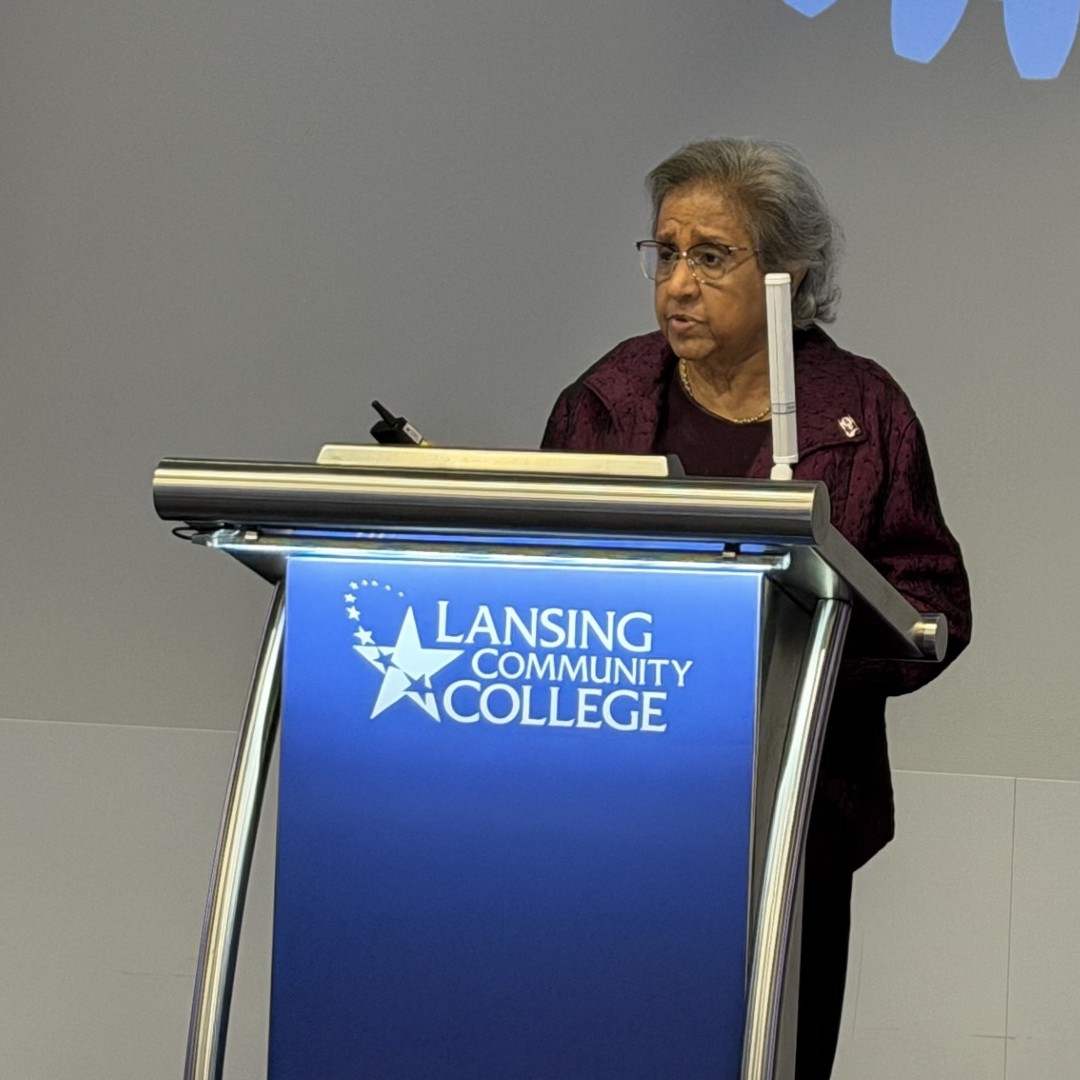
Chair of the Month/Day Uma Umakanth introduced today’s speaker, Dr. Roshni Kulkarni who, in addition to receiving a distinguished fellow award from the federal administration and the Center for Disease Control, has been recognized with numerous awards and nominated to the Michigan Women’s Hall of Fame.
Dr. Kulkarni presented on “The Hidden Burden: Women and Girls with Bleeding Disorders — Underserved and Overlooked.”
She said, “If you think your name was difficult to pronounce, to my kids (students), Kulkarni became Cool Cat. Dr. Cool Cat. My first name is Roshni, which is also difficult to pronounce. My pet name at home is Roni. So to the kids, I became Dr. Macaroni Cool Cat. Some just call me Dr. Mac.” Who among us doesn’t love macaroni and cool cats?
Key takeaways from Dr. Cool Cat’s presentation on bleeding disorders (my list doesn’t do her justice, but I did my best to take copious notes):
Every 12 minutes somewhere in the world, a woman dies from excessive bleeding after childbirth called postpartum hemorrhage or PPH.
PPH affects 27 million women worldwide and kills 43,000 mothers each year.
It’s the leading cause of maternal deaths, and costs $10 billion worldwide annually.
Women and girls are disproportionately affected due to the bleeding challenges of menstruation and childbirth.
Undiagnosed, untreated blood disorders in women have medical consequences and unique issues at every life stage (see www. fwgbd.org).
“Heavy menstrual bleeding” is currently the preferred terminology of menorrhagia or abnormally heavy or prolonged menstrual periods.
One in 5 women and girls experience heavy menstrual bleeding (HMB), and 1 in 4 have a bleeding disorder.
171 million women in the U.S. have heavy menstrual bleeding with underlying bleeding disorders.
1.6 million women in the U.S. (or about 1 in every 100) may have a bleeding disorder.
Women and girls and bleeding disorders are a public concern.
A 2004 CDC study showed that it took 16 years from HMB onset to diagnose a bleeding disorder. Some women experienced delays ranging from 0 to 39 years, attributed to a lack of awareness of the signs and symptoms of bleeding disorders, challenges in lab testing, and the understanding of healthcare providers.
Underserved, overlooked, understudied. Marginalized individuals are dismissed, symptoms are normalized; stigmatized.
Hear me, see me, believe me.
Inherited bleeding disorders are lifelong.
Iron is the most important precious metal to prevent anemia.
Perimenopausal, postmenopausal bleeding.
Hemophilia is a mutation in the X chromosome.
Hemophilia is the most common blood disorder in the world.
Queen Victoria was the most famous hemophiliac.
30% of females carry a mutation in the X chromosome. Women and girls carrying the hemophilia gene have symptoms.
“Shemophilia” is a female hemophiliac.
Hemophilia treatment centers exist. There is one at MSU for patients with bleeding disorders.
World Federation of Hemophilia conducts an annual global survey.
1,220 countries responded.
112,947 female patients identified. There are also male hemophiliacs.
Normal menstrual cycle:
Begins between 1-14 years old
Occurs every 21-35 days duration of menses
Lasts 3 to 7 days
1 to 5 tablespoons blood loss per day
3-6 pads per day ·
The 7-2-1 rule is a guideline used to identify signs of heavy menstrual bleeding. There are three indicators:
Duration (your period lasts 7 days or longer)
Frequency (you need to change your pad or tampon every 2 hours or less)
Clot Size (you pass blood clots that are larger than 1 inch (about the size of a quarter)
If any one of these signs is present, it may indicate a need for medical attention
If your teeth bleed you may have bleeding disorder.
Pain in joints is often associated with bleeding (blood in joints).
Miscarriage: Pregnancy loss before 20 weeks.
Antepartum hemorrhage is vaginal bleeding from 22 weeks of gestation till delivery, which occurs in 2% to 5% of pregnancies.
Postpartum hemorrhage (PPH) is excessive bleeding (more than 2 cups vaginal blood loss or 4 cups post c-section). Be aware that PPH is a double-digit killer.
Many teens ask for hysterectomy because they are tired of heavy periods.
Hormone therapy may be given for heavy menstrual bleeding to reduce blood loss.
Iron replacement therapy.
Talk to a hematologist.
Proper neonatal management is imperative.
Babies can be born with hemophilia.
Brain bleed of babies when going through birth canal results in brain circumcision.
Planned cesarean delivery.
Avoid:
Fetal scalp electrode
Fetal blood sampling
Vacuum and forceps deliveries: Increased risk of intracranial hemorrhage
Administer Vitamin K, give immunizations.
Menstruation affects all aspects of a girl’s life: education, economics, health, dignity, participation.
In Uganda, girls experience shame. They don’t stand in class to answer questions. Many also have concerns about odor. Menstruation affects grades and career-choices.
Types of barriers:
Cultural – Silence, stigma, taboos, isolation, intimacy
Religious beliefs and practices
Societal: Priority given to males, rituals, lack of autonomy, forced hysterectomy
Physical: Distance – Access to specialists, lab testing
Financial barriers – Period poverty
Period poverty – missing school, reduced participation, iron deficiency, stigma.
Financial impact – health care costs, lost wages, reduced productivity, period poverty.
Global perspectives:
Exiled – menstrual isolation/seclusion
Female genital mutilation – partial or total removal of external female genitalia or other injury to the female genital organs for nonmedical reasons
No health benefits for girls and women; violation of human rights
Mostly carried out on young girls between 7-8 years (0-15 years)
Canada and USA: 513,000 girls in USA
Severe bleeding and pain, painful menstrual periods and urination, etc.
Need surveillance to prevent complications
Data collection and analysis.
Helps with clinical trials.
Patient and provider education.
Improve patient outcomes.
“Without data you’re just another person with an opinion.”
Learning Action Network (LAN) www.fwgbd.org.
Denver has an outreach clinic that services surrounding states (Montana, for e.g.).
No girl should miss school.
No woman should lose her livelihood.
No mother should lose her live because of bleeding.
Dr. Steve Robinson: Thanked Dr. Kulkani for recognizing the provision of free menstrual products at LCC. What else can we do? The Michigan Child Abuse and Neglect Tax checkbox allows residents to donate $5, $10, or more to the Children's Trust Fund. Couldn’t we also have a checkbox that allows us to direct a specific tax to support women and girls’ periods? Brilliant, Dr. Robinson!!
There was only time for a couple of questions before we adjourned at 1:28 p.m. Today’s meeting was a wonderful start to what should be an exciting new Rotary year.

 We have a service opportunity at the Greater Lansing Food Bank on Tuesday, September 22nd from 9:00 a.m. to 11:00 a.m. located at 5600 Food Ct., Bath Township. Please let Jason Brunette know if you can help: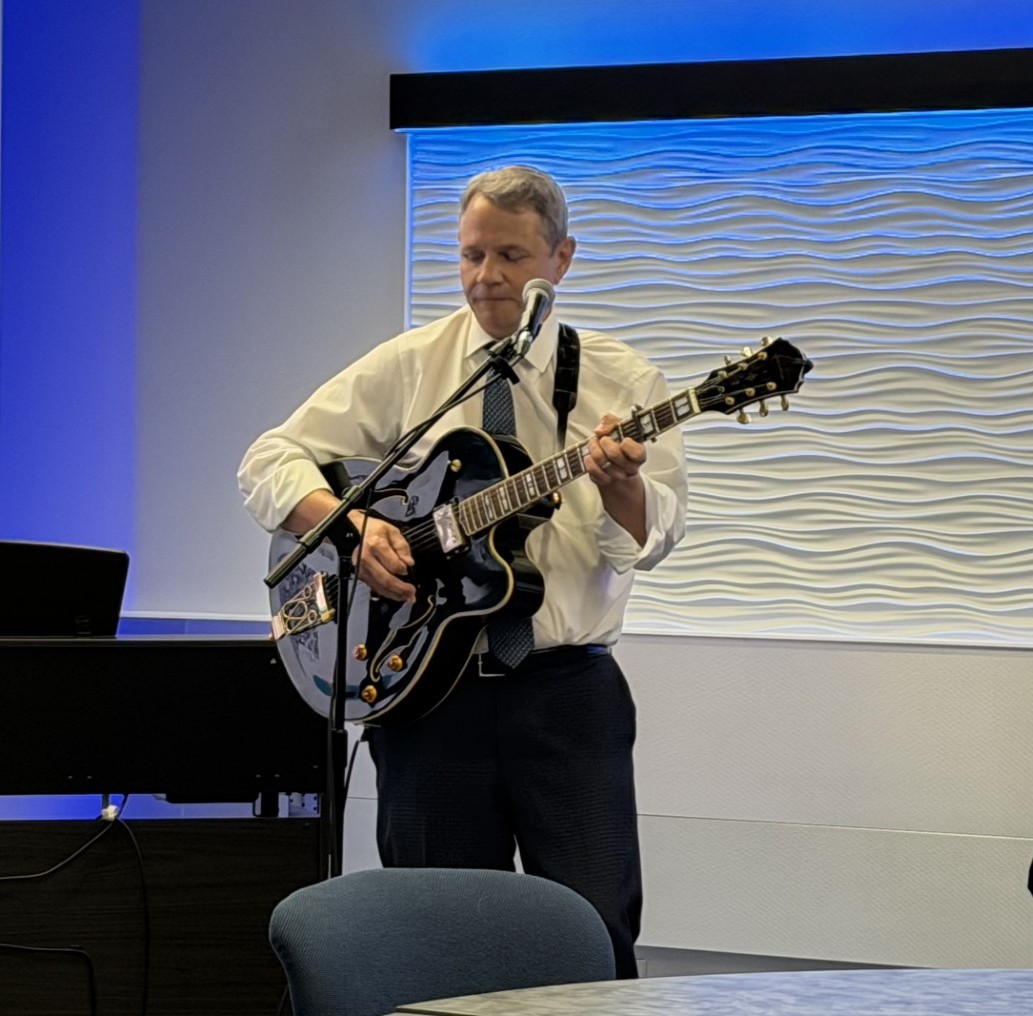
 Chair of the Month/Day Uma Umakanth introduced today’s speaker, Dr. Roshni Kulkarni who, in addition to receiving a distinguished fellow award from the federal administration and the Center for Disease Control, has been recognized with numerous awards and nominated to the Michigan Women’s Hall of Fame.