|
At the Country Club of Lansing, the club enjoyed yummy comfort food on this cloudy fall day. Thomas Stewart provided the invocation, which included a request for a Spartan win on Saturday. During guest introductions, yours truly took certain liberties on the roving microphone, providing a lengthy but informative introduction of her guest, daughter Nicole Baumer, a recent graduate of MSU in public relations and advertising who is in the job hunt. I will not take special liberties as editarian by inserting her resume. (Feel free to email me for it.)
Linda Lynch reported the health of the club is good. President Davis reported that we had good turnouts at the golf outing and on Loftus Day. He announced that the Charlotte Rotary Club is having a special meeting October 11 at noon at the First Congregational Church in Charlotte. Rotary International’s Polio Eradication Chair, Geoff Goff, will be the speaker. Contact Cathy for more info.
Jenn Dubey informed us that the International Committee is taking applications now. There is a flyer outlining the criteria and it is easy to apply. Rotarians can sponsor a project idea without organizing it. Contact Jenn for more info.
President Davis informed us that we’ve have three Rotary shirts available for purchase for quite some time and he’s looking for buyers. Noting that they are all men’s size small, he threw one at Dave O’Leary.
President Davis read a letter from Rotary International, congratulating the club on our 100th anniversary. He announced our District Governor’s personal agenda to get all Rotarians to learn CPR. Showing us a kit that is available to each of us, he pulled out an inflatable dummy “in case you’re lonely.”
Ken Beachler introduced special music by Doug Carlton on the clarinet. President Davis thanked Mr. Carlton for “lulling the club with ‘I only have eyes for you’ just before we learn about Molecular Biology.”
Kurt Guter was chair of the day and introduced David Arnosti, Professor of Biochemistry and Molecular Biology at Michigan State University. A native of Milwaukee, WI, he obtained his undergraduate education at Lawrence University, followed by graduate studies at UC Berkeley, and postdoctoral training in Zurich and San Diego. Since 1996, Dr. Arnosti’s laboratory has conducted research on mechanisms of gene regulation, funded by the National Institutes of Health. Dr. Arnosti opened his remarks by comparing DNA technology to Rotary’s four-way test, then provided some history on the pioneers in the field. Please bear with me if I got any of what he taught us wrong…it would be the student’s fault here, not the teacher’s! So, human genomes are genetic chromosomes. Sequencing of DNA was completed several years ago, and humans have 3 million base pairs, or 25,000 genes – 99% of which are identical among all humans. It’s the 1% that gives us different characteristic traits, like hair color and resistance or sensitivity to diseases. Genes are made of DNA, which encodes a protein like insulin. Genes get copied to RNA (a process called transcription) which turns into protein. By studying types of cancers, we find the presence of certain genes, such as the case of Angelina Jolie whose DNA testing uncovered the gene for breast cancer. She opted for a double mastectomy though she didn’t have cancer. Then Dr. Arnosti explained “CRISPR” technology (sorry I didn’t catch what the acronym stands for), which unlocks genome editing and “scissoring” – which reprograms DNA to knock out a gene or fix a gene. CRISPR technology has created a lot of excitement in the market, leading to many new businesses and starting patent fights because no one “owns” the technology. CRISPR can re-engineer a patient’s immune cells to, say, fight cancer or combat blindness. This technology is also used in agriculture, for example removing a gene to produce hornless dairy cows for safer milking, or knocking out the gene in mushrooms that cause them to turn brown when bruised. Since there is no foreign DNA added, these mushrooms are not considered “genetically modified” by the law’s definition. True GMOs are a hot issue with strong arguments on both sides. Lastly, Dr. Arnosti talked about genetic engineering on human embryos – CRISPR technology can be readily applied, but legislators are way behind the science. Experts say we need to consider five things: 1. Safety; 2. Communication with the public; 3. Development of guidelines on ethically acceptable practices; 4. Regulations for laboratory work; and 5. Caution must be taken when considering experiments modifying human embryos – we are simply not ready.
|


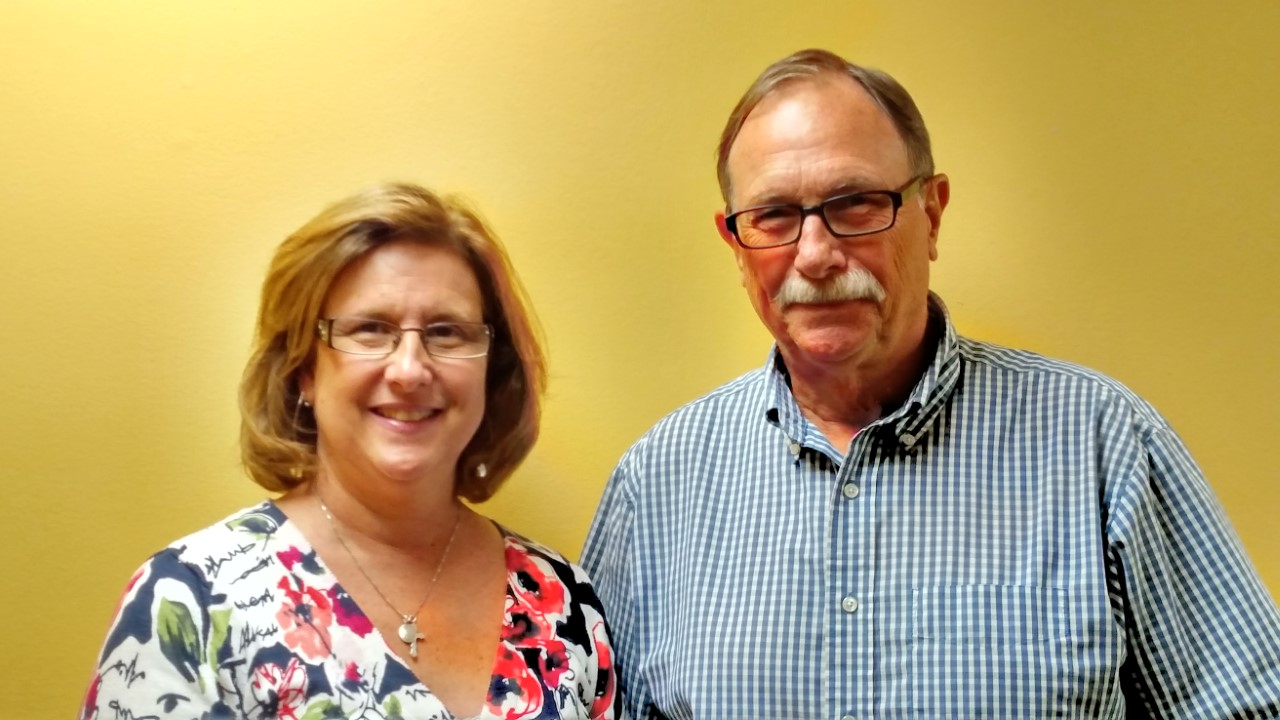 Maria Peak, has worked in the field of special education for Eaton Regional Education Services Association (ERESA) in Charlotte, Michigan from 1985 to 2013. At ERESA, she was a classroom teacher and the transition coordinator for the county. In 2013, Maria was the project coordinator for Michigan Transition Outcomes Project, a project through the Michigan Department of Education, Office of Special Education. In 2015, Maria became the Director of ASPPIRE, a non-profit organization that supports individuals with social difficulties. Maria has presented on a variety of topics throughout the state and country. Maria is also the coauthor of the C.A.M (Centered Around Me) Corder, which is a tool that assists special education teacher, students and parents with the IEP (Individualized Education Program) process. Maria completed her undergraduate degree from Eastern Michigan University with a major in Special Education with an emphasis on Cognitive Impairments. Her graduate studies were Western Michigan University.
 Richard Gleason died Friday, September 23rd, 2016. The funeral services will be Monday, October 3rd, 1:00 p.m. at Plymouth Congregational Church, located at 2001 West Grand River Avenue, Lansing. The visitation two hours prior at 11:00 a.m. Dick joined Lansing Rotary on June 9th, 1976 with Claud Erickson as his sponsor.