In 1984, a group of artists formed the North Lansing Art Association (NLAA) which was renamed the Old Town Business & Art Development Association (OTBADA) to eventually become the Michigan Institute for Contemporary Art (MICA) with a mission to catalyze community transformation through the arts.
During the early 1980s young artists discovered a neighborhood in Lansing that had the city’s highest concentration of historic buildings but had been mostly abandoned. They began renting and buying properties for studios, art galleries and performance space.
For another 100 years, the area flourished and was enriched by the addition of the Hispanic community. But, like many American cities in the 1960s and 1970s, the neighborhood began losing residents, businesses, and customers as more people moved to the suburbs. The area languished as many storefronts, businesses, homes, and buildings became vacant, abandoned, and boarded up.
Between 1978 and 1990, artists and young entrepreneurs started restoring many of the district’s historic buildings. During the early 1990s, visioning sessions led by the Business & Art Development Association, coordinated by MessageMakers, and supported by the Local Initiatives Support Corporation were held to frame the values, identify key assets, and develop a vision for the district. A special effort was made to engage a wide array of stakeholders from the neighborhood, including artists, property owners, business owners, residents, local and regional governments, universities, historians, architects, and other talents and resources from around the state and country. During the visioning process, they named the neighborhood Old Town, acknowledging its historical significance to the region, and focus on developing the art, retail, and creative services sectors with an emphasis on enhancing an arts-centric community.
The organization also partnered with Michigan State University's Center for Community Economic Development to conduct its first Community Income and Expenditure Model Study (CIEM) to gain insight into the district’s income and expenditure ‘leakages’ and begin to identify ways to grow and retain income.
OtherWise Art Gallery was opened in 1992 as the organization's headquarters. OtherWise showcased the works of artists from around the world. It hosted poety events and for seven years was a venue for live concerts, featuring the first public performances by many startup, basement and garage bands.
In 1994 MICA produced its first big music festival, the Art & October Fest and in 1995 its first Lansing JazzFest and years later started Michigan BluesFest.
In 1995, MICA wrote a grant and obtained funding from the National Trust for Historic Preservation and the Local Initiatives Support Corporation to enable Old Town to be among the first six urban Mainstreet communities in the United States. To manage the Mainstreet program, MICA helped start the Old Town Commercial Association (OTCA) in 1996 and worked to obtain funding from the City iof Lansing and the Principal Shopping District to support the startup phase of the Mainstreet program.
At the same time, and on the urging of then-Mayor David Hollister, MICA restored a set of three buildings, which included low-and moderate-income loft apartments, a business incubator, and offices. These buildings are now home to the Arts Council of Greater Lansing, MICA, and MICA Art Gallery.
MICA is recognized for innovative programming and is a recipient of numerous awards including the Governor's ArtServe Award, Festival & Events Association awards, Addy awards, the Creative Community Award and many more.
a 501(c)3 federally tax-exempt nonprofit organization, it has a robust volunteer base, maintains stable volunteer leadership, and provides programs for the benefit of the entire community. It is funded through the support of sponsors, donations and grants. For more that three decades, MICA has been producing music festivals, helping preserve and restore historic buildings, leading community revitalization efforts, exhibiting visual artists, coordinating poetry, dance, and other performances that engage, inspire, catalyze, and deonstrate the vitality and value of the arts community and the vibrancy of the urban centers as great places to play, work and live.
Each year our Foundation looks to its members to identify International Projects worthy of our assistance. Members of the Rotary Club of Lansing can sponsor grants to organizations which advance world understanding, goodwill, and peace through the improvement of health, the support of education, and the alleviation of poverty. The International Committee meets to review and score applications for funding. Funding is typically in the $1,000 to $5,000 range per project. Annually our Foundation has typically awarded a total of $30,000 to $40,000 for international grants.
DowntownLansing Inc is having its annual Big Red Ball on Saturday, November 21, and they are looking for volunteers to help with the event. DLI’s mission is to “strengthen and nurture the culture, health, and sustainability of our downtown district.” Shifts on November 21 include event setup 2:30-5:30 pm, various shifts during the event from 5:30-10:00 pm, and event tear down and cleanup from 9:30-11:30 pm. More information can be found here: https://signup.com/go/GpgGkpd.
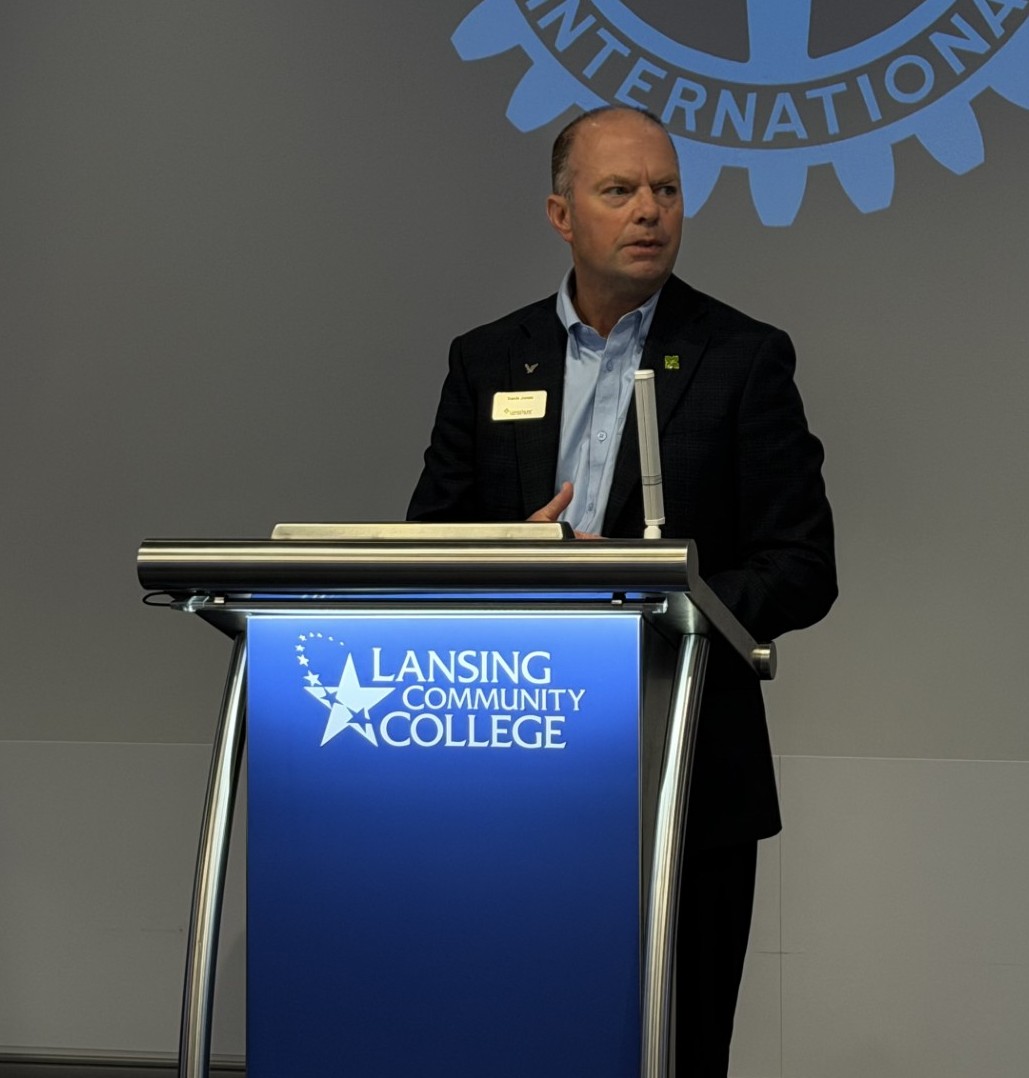
The Lansing Rotary Club's meeting featured fellowship, music, Foundation news, member celebrations, and a presentation by Travis Jones, president and CEO of Greenstone Farm Credit Services.
President Susan brought us together with the ringing of the Rotary Bell and led us in reciting the four-way test. Terry Terry’s reflection centered on a loving-kindness meditation, or Metta, a traditional Buddhist practice focused on cultivating goodwill, kindness, and compassion toward oneself and others. The club then sang the Star-Spangled Banner.
Several guests were introduced, including a representative from the Salvation Army, Mario Bledsoe of Lansing and a former Rotarian, Todd Terwillegar returning to visit the club.
Members enjoyed a special musical performance introduced by Terry Terry. The musician was a Michigan-based pianist, organist, and educator pursuing advanced studies in music performance at Michigan State University.
Rotary Foundation Chair, John Shaski announced that the Lansing Rotary Foundation board had approved a $5,000 contribution to Transcendence. The organization had recently presented to the club through its Diversity, Equity, and Inclusion programming. Members were particularly moved by Dr. Levonte Hurd's story and the influence former Rotarian Virginia Allen had on his life and mission.
John explained that Transcendence had lost a $10,000 federal grant following concerns related to diversity, equity, and inclusion references. The Foundation determined that the situation qualified as an emergency and committed half of its $10,000 emergency reserve. Members were encouraged to make additional contributions, including through qualified charitable distributions for eligible individuals.
Members were reminded that the International Grants application period had opened, with applications due November 27.
President Susan announced that Downtown Lansing's Big Red Ball would take place November 21, with volunteers needed to assist with the event.
Phyllis presented the October birthday report and announced that the club achieved 100% participation, raising $1,500. Members shared stories about their oldest and most treasured pieces of clothing. Highlights included a dress purchased in Aruba more than 20 years ago, a Detroit Tigers jersey that carried memories of a father, childhood horseback-riding boots, a longtime favorite shirt, and a sweater purchased for an early date with a future spouse. The stories offered a warm reminder of the memories and relationships attached to everyday possessions.
Terry introduced Travis Jones, president and CEO of Greenstone Farm Credit Services.
Jones explained that Greenstone is a member-owned financial cooperative serving Michigan and portions of northeastern Wisconsin. With 34 branches and nearly 700 employees, the organization provides agricultural lending, crop insurance, rural home financing, and other financial services.
He highlighted Greenstone's role in supporting Michigan's agricultural economy, which contributes approximately $125 billion to the state's economy and produces more than 300 agricultural commodities.
Jones also discussed Greenstone's Cultivate Growth program for young, beginning, and small farmers, its annual patronage distributions to members, and its investments in scholarships and community service.
Greenstone has returned approximately $1.2 billion to its members over the past 21 years, including $125 million in the previous year.
Rotarians engaged Jones in a discussion about agricultural lending, crop insurance, commodity diversification, regulatory oversight, renewable energy projects, and Greenstone's financing of rural broadband infrastructure.
The conversation highlighted the complexity of agricultural financing and the importance of managing risk while supporting farmers and rural businesses.
President Susan thanked members and guests for attending and encouraged everyone to enjoy the weekend. She previewed its next meeting, featuring a speaker from the Michigan Institute for Contemporary Art.

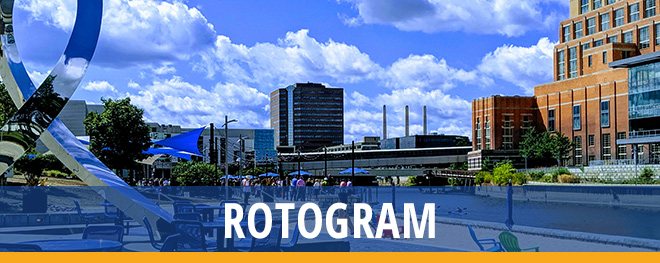
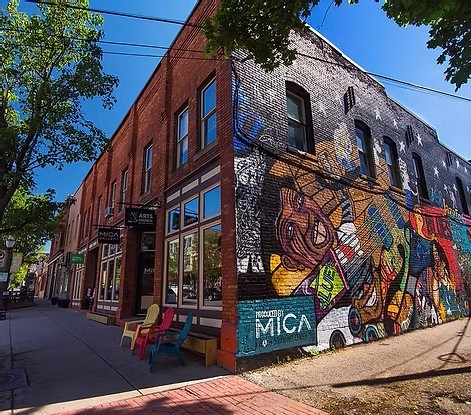 In 1984, a group of artists formed the North Lansing Art Association (NLAA) which was renamed the Old Town Business & Art Development Association (OTBADA) to eventually become the Michigan Institute for Contemporary Art (MICA) with a mission to catalyze community transformation through the arts.

 DowntownLansing Inc is having its annual Big Red Ball on Saturday, November 21, and they are looking for volunteers to help with the event. DLI’s mission is to “strengthen and nurture the culture, health, and sustainability of our downtown district.” Shifts on November 21 include event setup 2:30-5:30 pm, various shifts during the event from 5:30-10:00 pm, and event tear down and cleanup from 9:30-11:30 pm. More information can be found here:
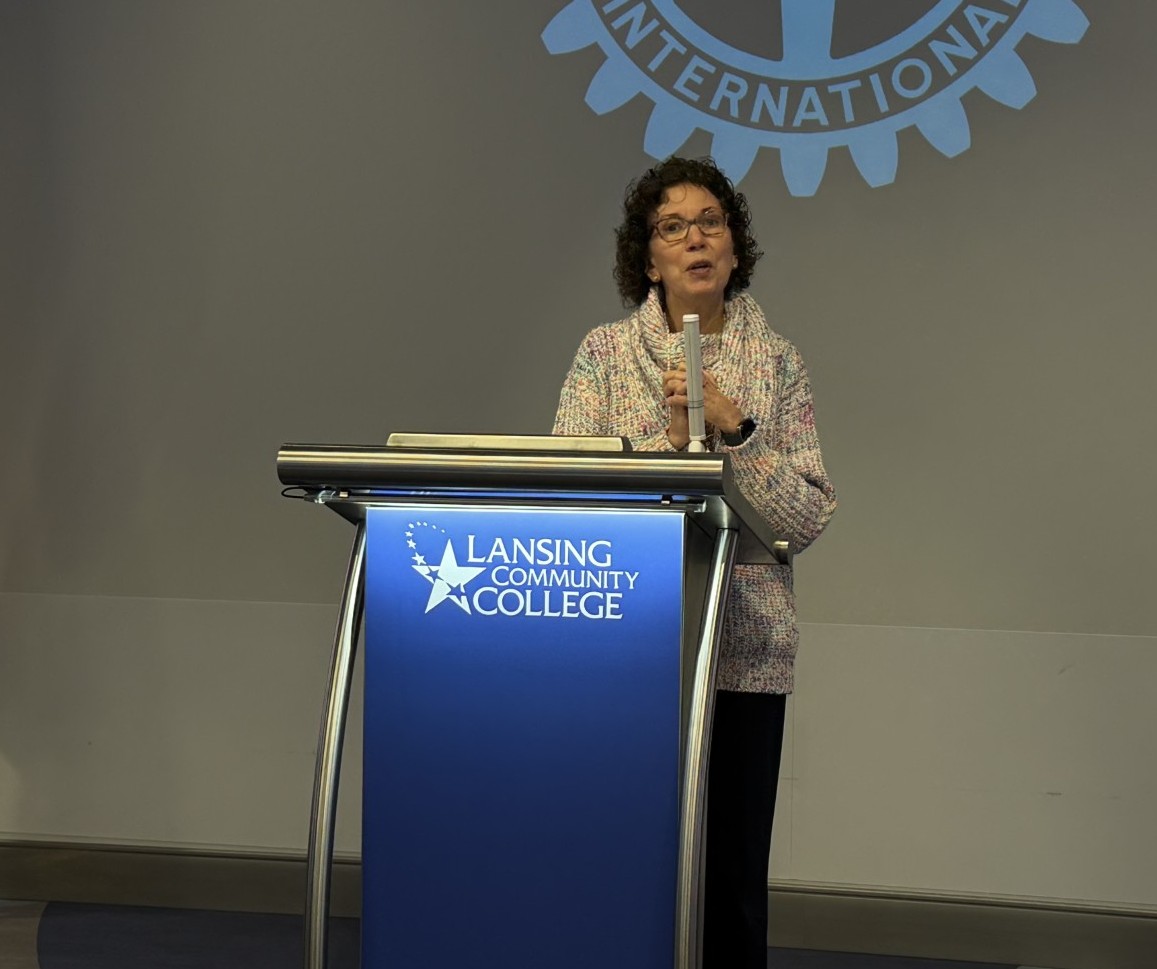 Phyllis presented the October birthday report and announced that the club achieved 100% participation, raising $1,500. Members shared stories about their oldest and most treasured pieces of clothing. Highlights included a dress purchased in Aruba more than 20 years ago, a Detroit Tigers jersey that carried memories of a father, childhood horseback-riding boots, a longtime favorite shirt, and a sweater purchased for an early date with a future spouse. The stories offered a warm reminder of the memories and relationships attached to everyday possessions.